
Regular Royal Occasion
Le Concert Spirituel's "Wigmore" Handel at St James's Spanish Place

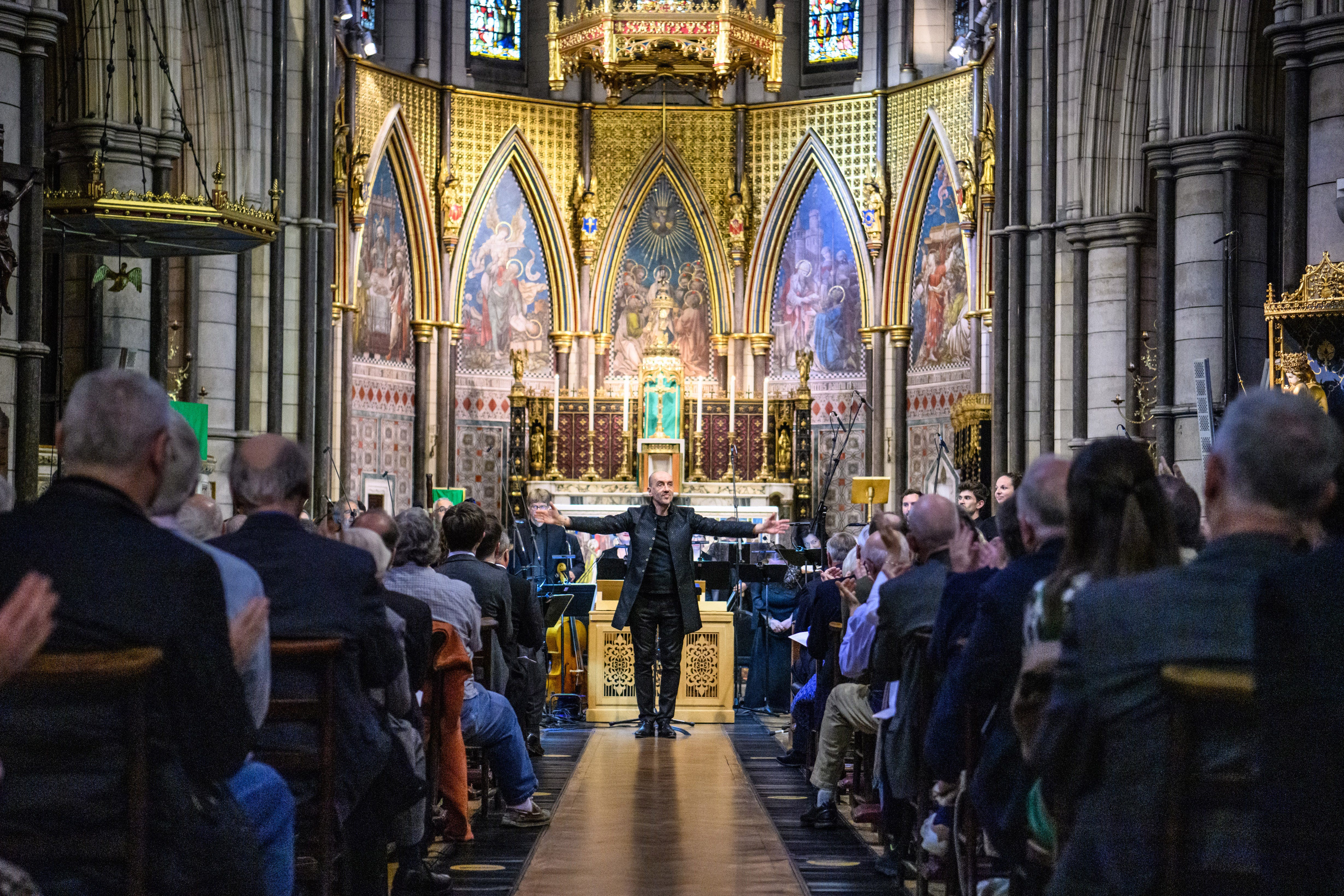
Hervé Niquet acknowledges applause for Le Concert Spirituel’s Handel at St James’s, Spanish Place Picture by Matt Crossick/PA Wire
Exactly a month after his coronation at Westminster Abbey, King Charles III made an unexpected visit to St James’s Church in Marylebone, a stone’s throw from Wigmore Hall, for a celebratory evening of Handel performed by Hervé Niquet’s elite Baroque ensemble, Le Concert Spirituel. Billed as ‘Wigmore Hall at St James’s Inaugural Concert’, it was a notable event if only for the presence of the monarch, ostensibly to hear the anthems Handel wrote for his music-loving ancestor George II’s coronation in 1727.
To some of those present, however, the King’s patronage of the concert had a symbolic significance, as if intended to send a message to his government which, through its agents, the Arts Council of Britain, is doing its utmost to destroy the music-making that made Charles’s coronation such a memorable, world-class occasion.
Our King makes no secret of his love for music, and has a subtle knack of showing up our Brexit government: he recently spoke German at the Berlin Bundestag in a gesture of friendship towards our former EU partners. It was canny of Wigmore Hall’s director, John Gilhooly, in his guise as Chair of the Royal Philharmonic Society, to ask Charles on this occasion to confer the Gold Medal on its latest recipient, Judith Weir, who is Master of the King’s Music. Dr Kadiatu Kanneh-Mason, matriarch of the well-known musical family, delivered a glowing citation to the composer, whose choral music and operas are now performed worldwide.
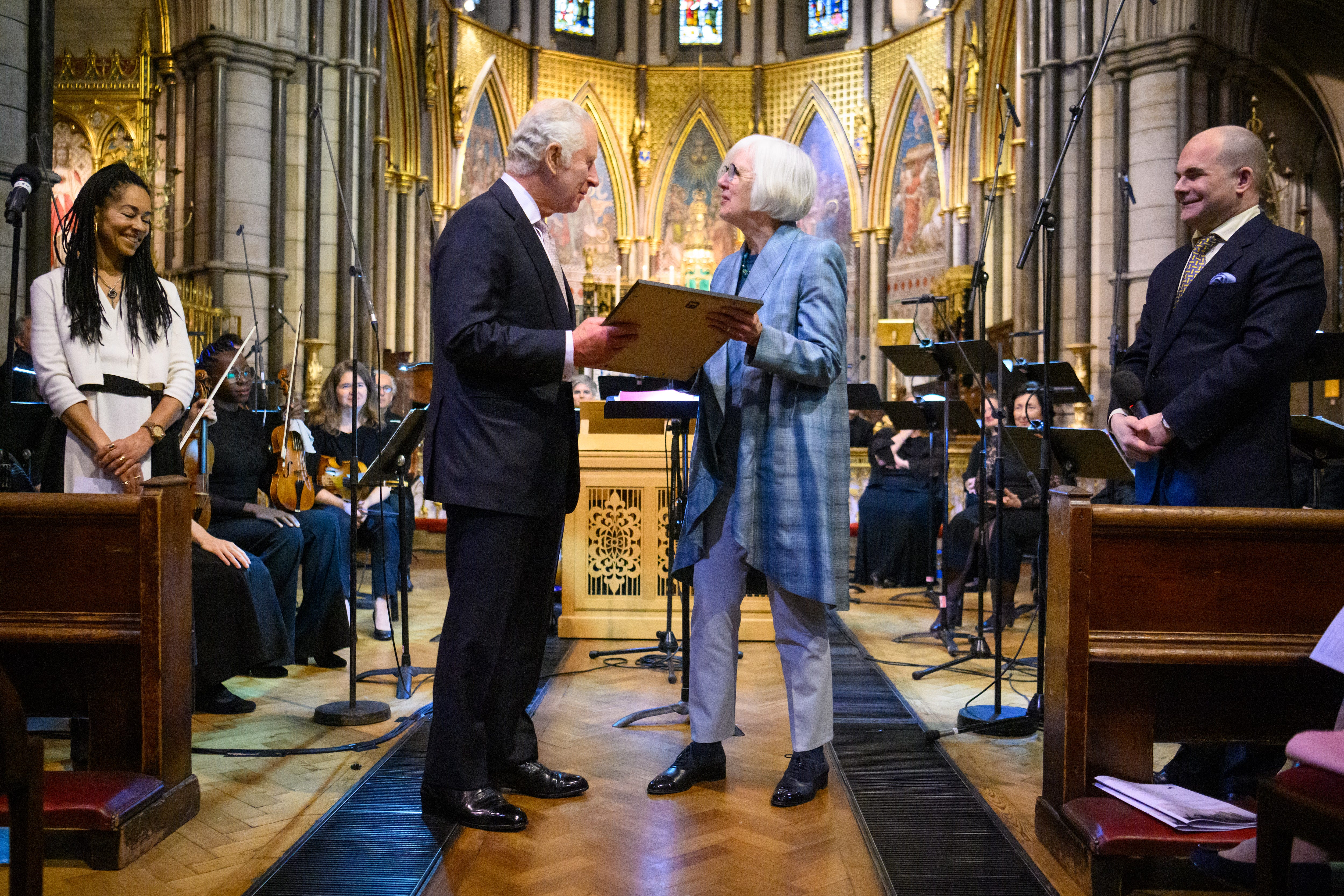
The King presents the RPS Gold Medal to the Master of the King’s Music, Judith Weir, Kadiatu Kanneh-Mason (left), John Gilhooly (right) looking on Picture by Matt Crossick/PA Wire
Niquet’s programme - after St James’s director of music, Iestyn Evans, and his assistant, Edward Tambling, had played Bach organ voluntaries - began with a Royal Fanfare by contemporary French composer Francois Saint-Yves (Le Concert Spirituel’s organist) and the National Anthem, sung by Roderick Williams with the audience joining in for the second verse.
But the programme proper began with Handel’s Dettingen Te Deum, written to celebrate George II’s defeat of the French at the eponymous battle during the War of the Austrian Succession. This succinct, celebratory piece is still something of a rarity, possibly because it belongs to Handel’s ‘tub-thumping-for-the-Hanoverians’ genre, packed with military pomp (trumpets and kettledrums) and martial swagger, with borrowings from his oratorios Israel in Egypt and Saul. This is Handel as court composer - which he wasn’t officially - in the manner of Lully’s propagandist fluffing of Louis XIV’s outsized ego. Niquet and his musicians are well versed in this kind of thing, but I suspect an English Baroque ensemble would have brought more vim to Handel’s choral writing, although Laurent Sauron’s enthusiasm on the timpani could not be faulted.
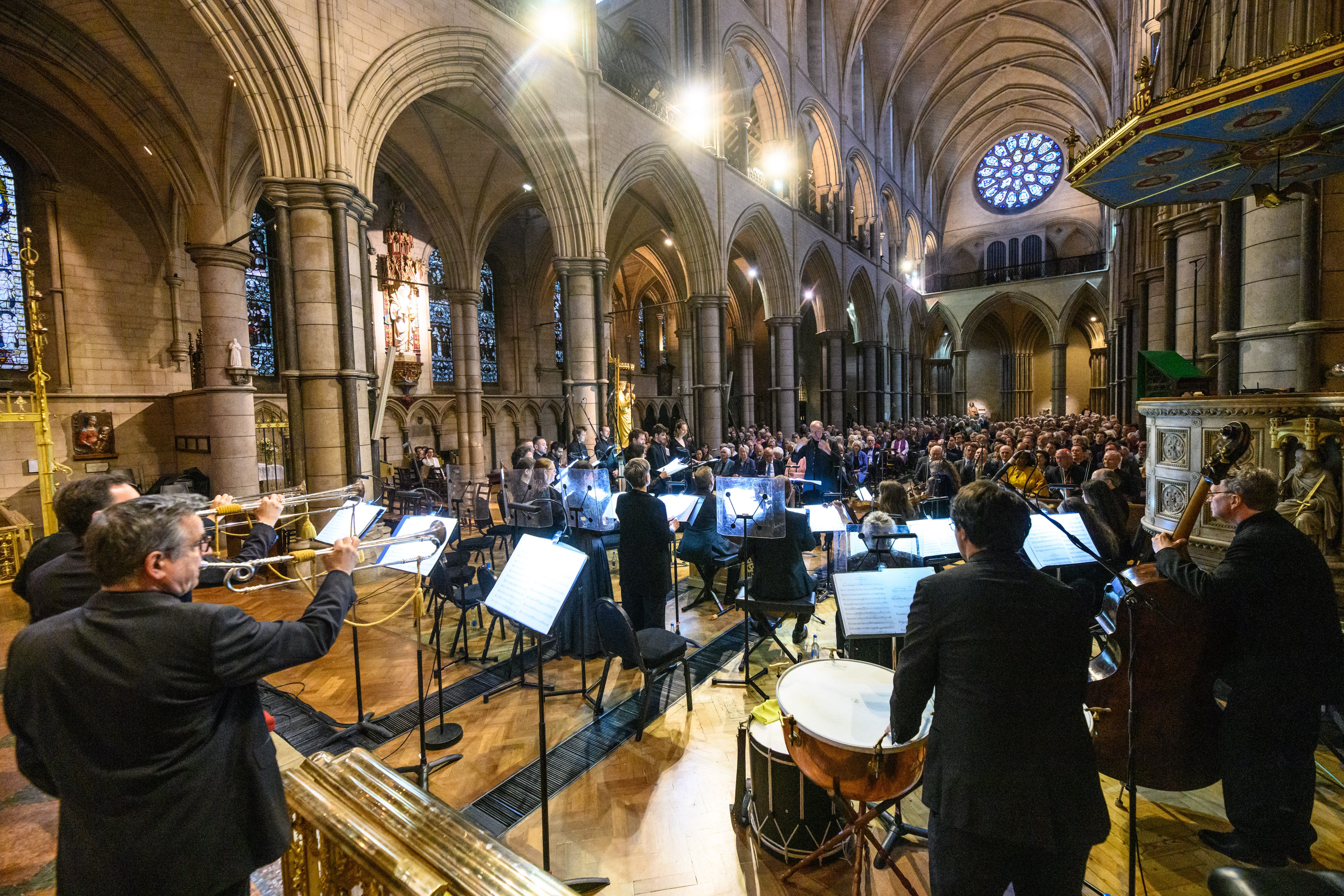
The trumpets shall sound: Le Concert Spiritual and Hervé Niquet at St James, Spanish Place Picture by Matt Crossick/PA Wire
After the RPS Presentation and interval, we were treated to Handel’s great Coronation Anthems - in the wrong order - including the most popular, Zadok the Priest, which has been sung at every coronation from 1727 to 2023, here given as the climax rather than at the start. I can’t help feeling the French musicians lacked something of the fervour of the performance at Westminster Abbey on June 6, but I only experienced that on television. St James’s is a smaller space. At the Wigmore itself the music would have made a stronger impact, although it might be a struggle to fit 30 performers onto the podium there - far less than the reputed 200 who gave the first performance in 1727. The good news is that St James’s, one of London’s grandest Roman Catholic churches, looks likely to be a regular Wigmore outpost, with Solomon’s Knot bringing their acclaimed staging of Bach’s St Matthew Passion to the venue on June 19.
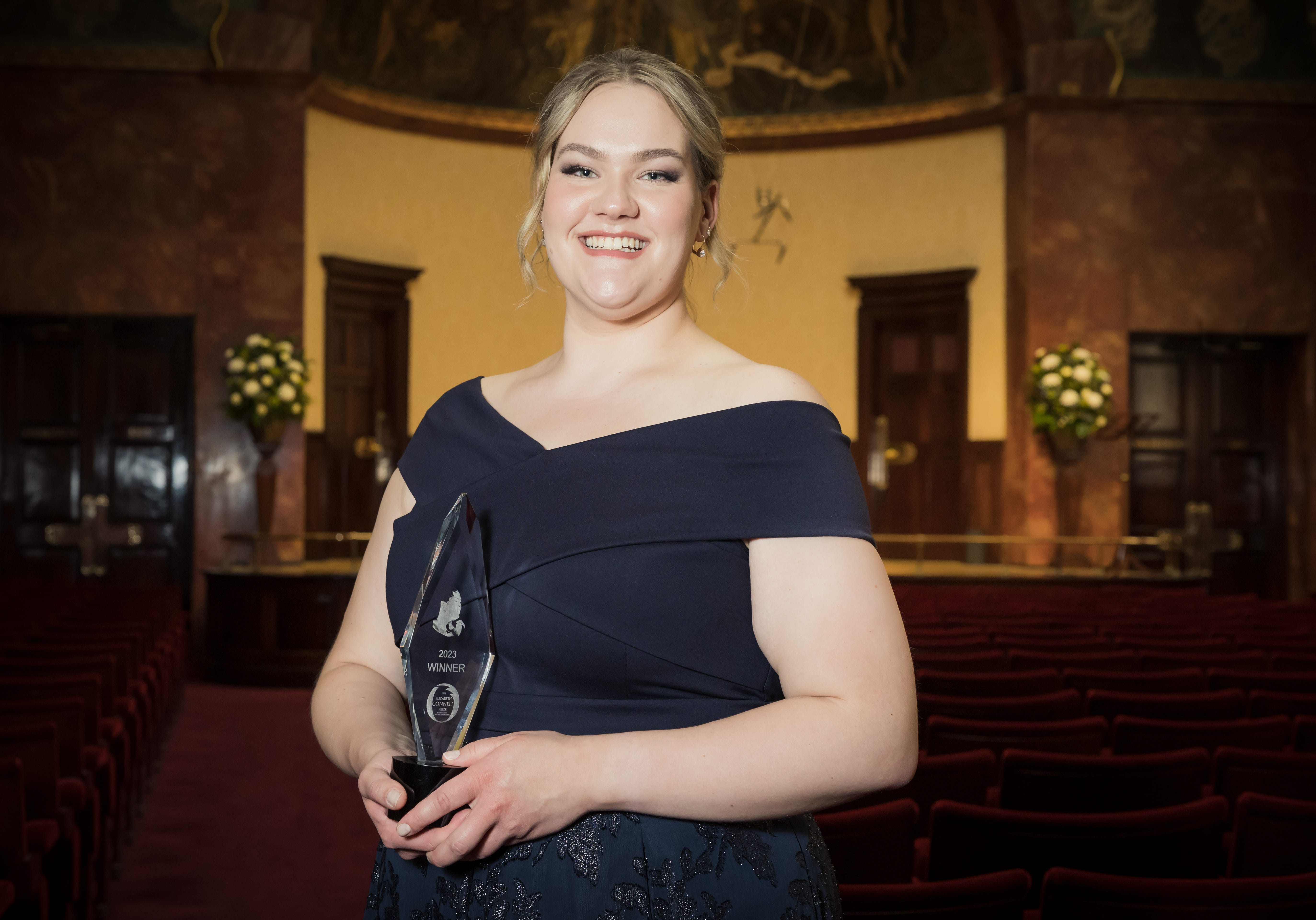
Name to watch: Finland’s Sonja Herranen takes the first prize and crystal trophy in the 2023 Elizabeth Connell International Singing Competition Picture by Emma Brown
Last Saturday Wigmore Hall hosted the final of the Elizabeth Connell International Singing Competition, held for the first time in London rather than Sydney, under the auspices of the Elizabeth Connell Scholarship Trust and the Joan Sutherland and Richard Bonynge Foundation. Connell, originally from South Africa, began her career at the Wexford Festival - she later became an Irish National - before joining English National Opera in the 1970s, the springboard to an international career which took her regularly to Australia. Before her premature death in 2012, she had hoped to retire to Sydney.
The Connell Prize is for dramatic sopranos and mezzos, and all six finalists at the Wigmore Hall showed potential in the Wagner-Verdi repertoire in which Connell excelled. At 26, Felicity Tomkins (New Zealand) and Sonja Herrjanen (Finland) were the youngest entrants, but Herrjanen displayed remarkable maturity in a poised account of Vitellia’s tricky opening aria from Mozart’s La clemenza di Tito and an involving one of Margherita’s ‘L’altra notte’ from Boïto’s Mefistofele. This won her the £15,000 first prize and crystal trophy, awarded by a panel of judges including Dame Anne Evans and Royal Opera casting director Peter Katona.
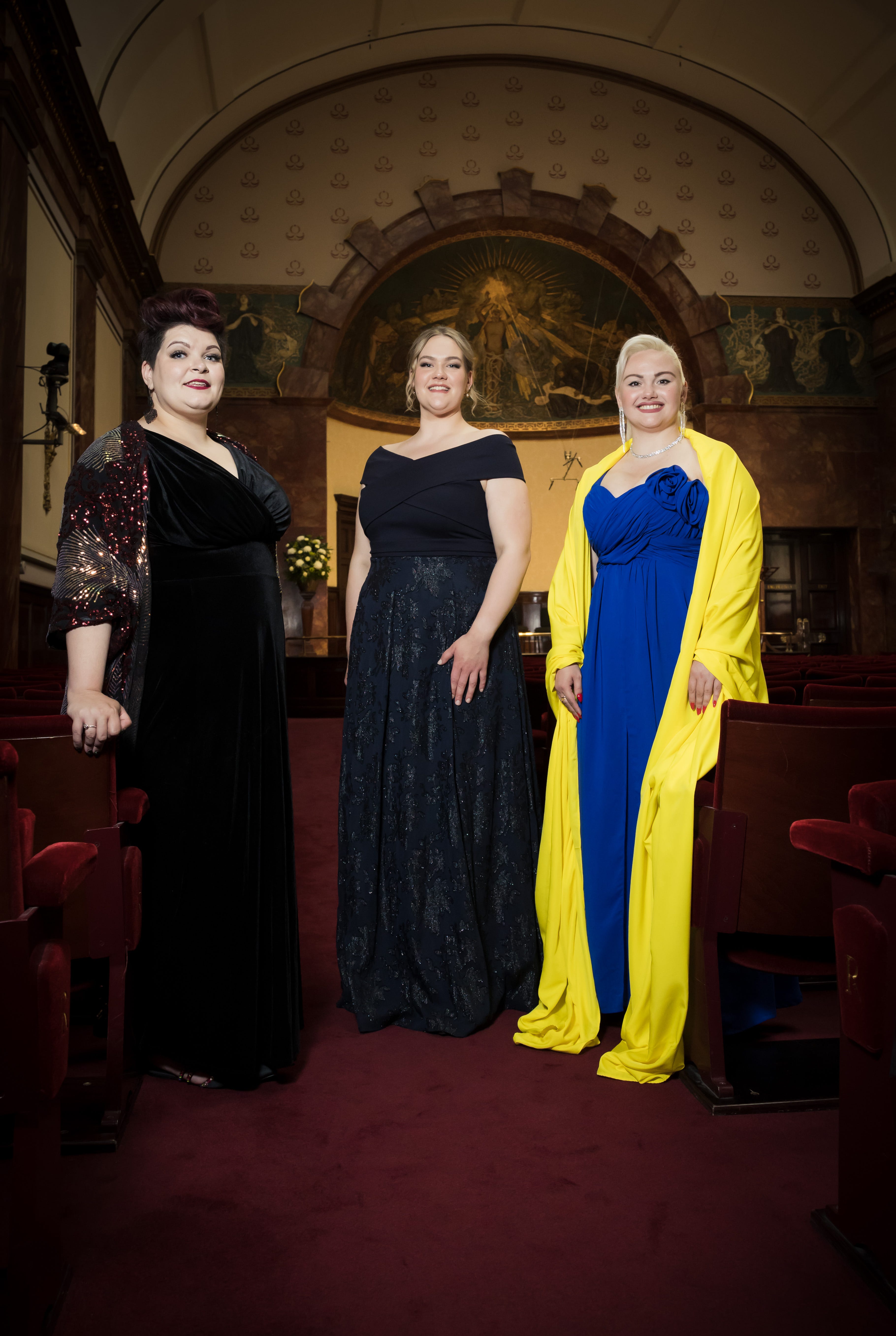
Connell prizewinners: Claire Barnett-Jones (Third), Sonja Herranen (First), Inna Husieva (Second) Picture by Emma Brown
The most accomplished performance came from Inna Husieva (Ukraine), whose glowing delivery of Marietta’s ‘Glück, das mir verblieb’ from Korngold’s Die Tote Stadt won her the second (£7,500) and audience (£500) prizes, though her unidiomatic ‘Amour, anime mon courage’ from Gounod’s Roméo et Julietteneeded better French and more refined tone.
Anna Erokhina (Ukraine) and Claire Barnett-Jones (England) went head to head in different arias from Saint-Saëns Samson et Dalila. Barnett-Jones prevailed, taking third prize (£5000) thanks to her assured delivery of Waltraute’s Narration from Götterdämmerung, and it came as little surprise to hear she will sing the Walküre Waltraute at Bayreuth this summer. Menna Cazel (Wales/Germany) may have been marked down for choosing mainly lyric soprano repertoire - Donna Anna’s fiendish Act 2 aria from Don Giovanni, which I wouldn’t recommend to any competition entrant, and Mimì’s Act 1 aria from La Bohème.
All things considered, the right contestant won the laurels: Herrjanen is a singer of immense promise. She has been cast as Third Norn in Finnish National Opera’s Ring production next season, a perfect professional beginning for a young dramatic soprano.
Solomon’s Knot perform JS Bach’s Matthäus-Passion at St James’s, Spanish Place, under the Wigmore Hall’s auspices on June 19.
Le Concert Spirituel’s concert will be broadcast on Radio 3 tonight and is available on BBC Sounds for a month.